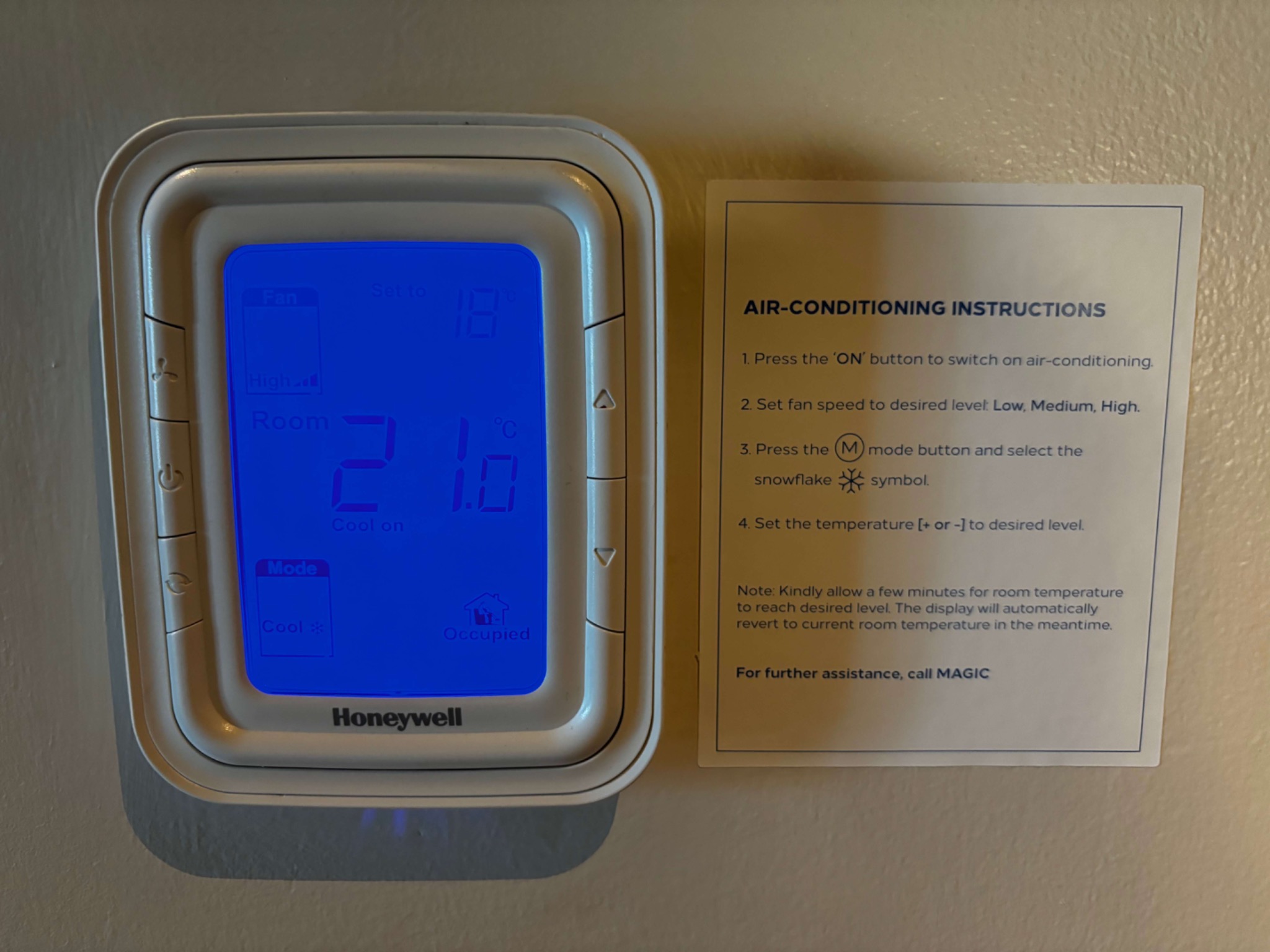
A real example of a Guest-facing instruction notice. When explanations become necessary, the question is whether the experience has already become too complicated.
There are moments in a hotel room when the Guest stops, reads something, reads it again and still has no idea what the hotel is trying to say.
That is usually the point at which a small sign becomes a bigger experience problem.
Hotel room instructions are supposed to help. They tell Guests how to use equipment, where to find services, what to avoid and, sometimes, what to do in an emergency. They are part of the operating experience, not decoration.
When the wording is unclear, inaccurate or simply strange, the Guest is left to guess. That might create mild irritation. It might create misuse of equipment. In some cases, it might create a safety issue.
The greater problem is what the sign reveals. Somebody wrote it. Somebody approved it. Somebody placed it in the room. Housekeeping sees it daily. Supervisors pass it. Managers may even stay in the same room type. Yet it remains there, confusing Guests one stay at a time.
That tells a Guest that the detail has not been checked, or that nobody has taken responsibility for correcting it.
In a luxury environment, clarity is part of service. A Guest should not have to decode the property’s instructions. If the message matters, it should be written properly. If it does not matter, it probably should not be there at all.
Signs, labels and room instructions are often overlooked because they feel minor. They are not. They are one of the easiest ways for a hotel to show whether it has discipline, attention to detail and respect for the Guest’s time.
If the Guest has to work out what the hotel meant, the communication has already failed.
The GUESTX View
Every room should be reviewed as a Guest uses it. Sit where the Guest sits. Read what the Guest reads. Press what the Guest presses. If a sign does not help, rewrite it, replace it or remove it.
← Back to blog